Is outsourcing to the Philippines legal? This is one of the most common questions asked by companies in the US, UK, Australia, and Europe when exploring global talent. The short answer is yes—outsourcing to the Philippines is legal when done correctly and compliantly.
In this guide, we explain how outsourcing works legally, what Western companies need to know, and how to avoid compliance risks when hiring Filipino freelancers or remote workers.
Why Companies Outsource to the Philippines
Western companies choose the Philippines because of:
- Strong English proficiency and cultural alignment
- Competitive labor costs
- A mature outsourcing and BPO industry
- Skilled professionals in admin, tech, marketing, and finance
Platforms like HireFilipino.work help businesses connect with vetted Filipino freelancers while following best practices for remote hiring.
👉 Learn more about how we support compliant outsourcing here: https://hirefilipino.work/about-us/
Is Outsourcing to the Philippines Legal?
Yes—outsourcing to the Philippines is legal for Western companies when workers are engaged as independent contractors or through compliant hiring structures.
Most international companies legally outsource by:
- Hiring Filipino freelancers as independent contractors
- Paying per project, hourly, or a monthly retainer
- Avoiding employer-employee misclassification
The Philippine government fully supports outsourcing, and the industry is regulated and well-established.
Independent Contractor vs Employee: What Matters
When outsourcing to the Philippines, Filipino freelancers are usually classified as independent contractors, not employees.
This means companies:
- Do not provide local employee benefits
- Do not withhold Philippine income tax
- Pay based on agreed contracts and invoices
To stay compliant, contracts should clearly define the scope of work, payment terms, and contractor status.
You can find more hiring guidance in our resource library: https://hirefilipino.work/blog/
Country-Specific Legal Considerations
United States
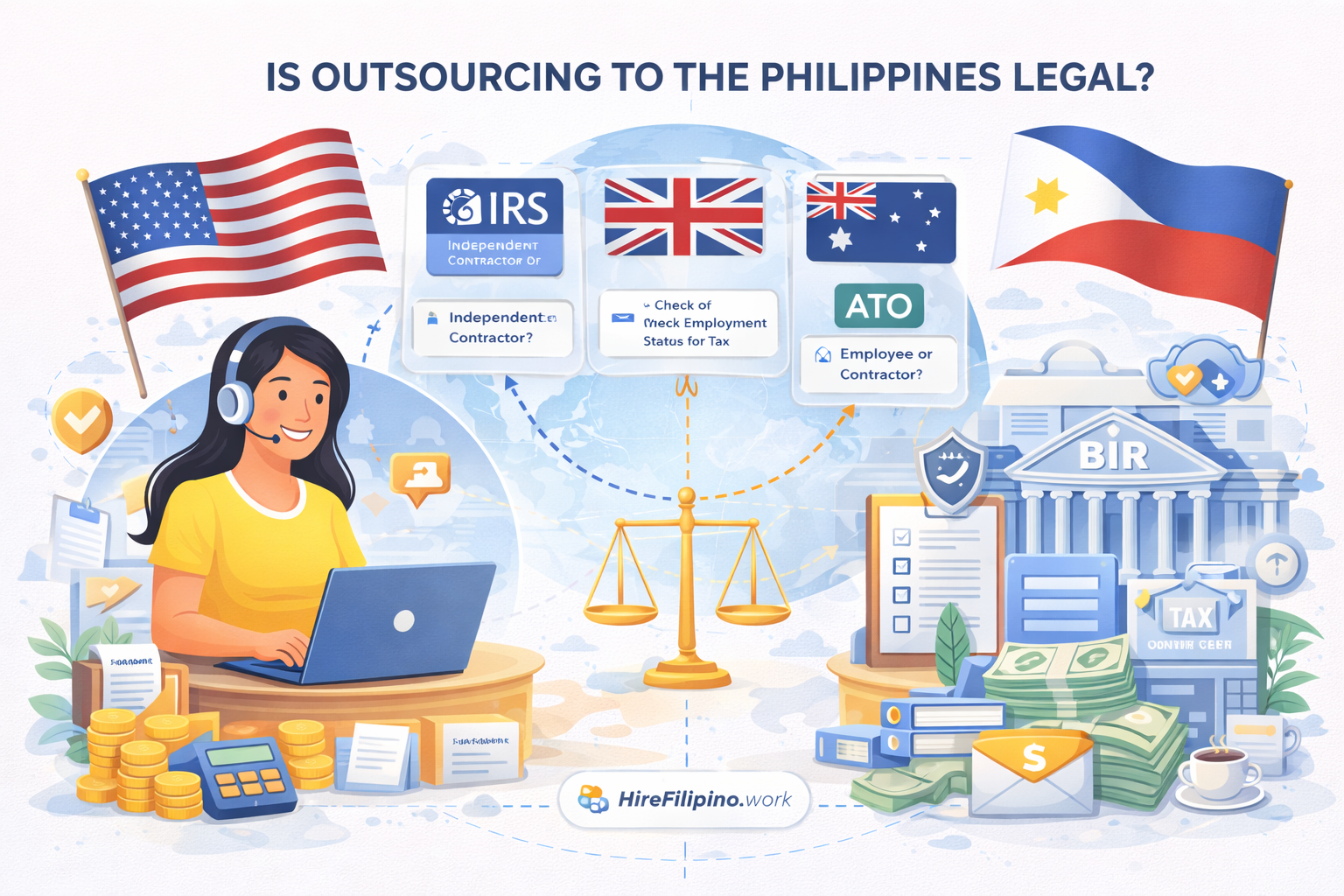
US companies can legally outsource overseas without violating US labor laws, as long as workers are not treated as US employees. The IRS provides guidance on contractor classification.
📘 Learn more from the IRS:
https://www.irs.gov/businesses/small-businesses-self-employed/independent-contractor-defined
United Kingdom
UK companies must follow IR35 principles, ensuring overseas freelancers are genuinely independent. Proper contracts and work boundaries are key.
📘 Official guidance from HMRC:
https://www.gov.uk/guidance/check-employment-status-for-tax
Australia
Australian businesses may outsource overseas but must avoid sham contracting and follow ATO contractor rules.
📘 ATO contractor guidance:
https://www.ato.gov.au/business/employee-or-contractor/
How Filipino Freelancers Handle Taxes
Filipino freelancers are responsible for:
- Registering with the Philippine Bureau of Internal Revenue (BIR)
- Filing and paying their own income taxes
- Managing government contributions if self-employed
This keeps Western companies free from Philippine payroll and tax obligations.
Best Practices for Legal Outsourcing
To outsource safely and legally:
- Use written contracts
- Define independent contractor relationships clearly
- Avoid micromanagement and employee-like control
- Pay through secure, documented payment platforms
- Work with trusted platforms that understand global hiring
If you’re unsure where to start, you can reach out for guidance here:
https://hirefilipino.work/contact/
Final Thoughts
So, is outsourcing to the Philippines legal? Absolutely. With the right structure, clear contracts, and ethical practices, Western companies can confidently outsource to Filipino freelancers while staying fully compliant.
Outsourcing isn’t just legal—it’s one of the smartest ways to scale globally in today’s remote-first economy.