

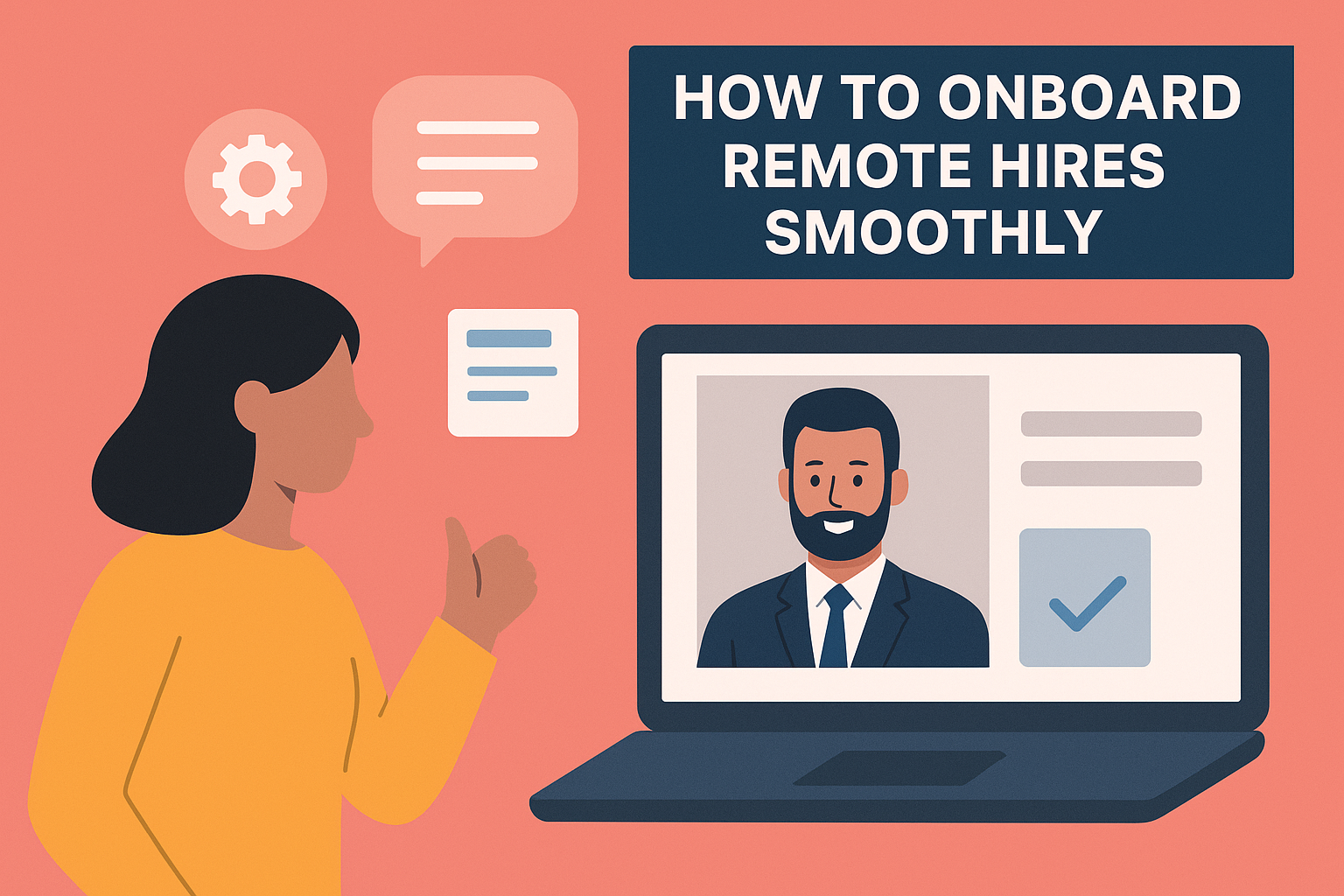
How to Onboard Remote Hires Smoothly
Hiring remote workers—especially from high-talent regions like the Philippines—can dramatically improve your business efficiency. However, their success depends heavily on how well you onboard them. A smooth onboarding process ensures your new hires feel confident, aligned with your goals, and ready to deliver results from day one.
This guide will show you how to onboard remote hires smoothly, build trust, and set them up for success.
Why Onboarding Matters in Remote Work
Unlike traditional in-office setups, remote workers rely entirely on virtual communication and digital processes. A strong onboarding experience eliminates confusion, reduces mistakes, and helps new hires integrate quickly into your workflow.
Step 1: Prepare Before Their First Day
Onboarding begins before their official start date.
What you should prepare:
- Login credentials
- Tools and software access
- A clear job outline
- Training materials
- Team introduction notes
Helpful Resource:
You can review examples of role structures on HireFilipino.work’s About Page, which explains how Filipino talent is sourced and supported:
👉 https://hirefilipino.work/about/ — Learn how structured talent sourcing creates better onboarding results.
Step 2: Set Clear Expectations
Remote hires perform best when expectations are laid out from the beginning.
Clarify the following:
- Working hours
- Communication channel usage
- Deadlines and reporting structure
- KPI expectations
- Tools and systems
Useful Guide:
👉 https://www.notion.so/product — See how Notion helps organize workflows and task expectations.
Step 3: Create a Job-Specific Training Path
Avoid overwhelming new hires by giving them a step-by-step roadmap.
Example training path:
- Company introduction
- Role goals
- Tools overview
- Daily routine
- Hands-on tasks
- First-week evaluation
Related Resource:
Check this guide on building remote job posts and training systems:
👉 https://hirefilipino.work/blog/how-to-write-effective-job-posts-for-remote-talent/ — Shows how structured clarity supports better onboarding.
Step 4: Assign a Point Person
Remote hires should know exactly whom to contact for questions.
A point person helps with:
- Task clarifications
- Access issues
- Performance guidance
- Culture alignment
It makes onboarding feel more human and less overwhelming.
Step 5: Use the Right Communication Tools
Communication is the backbone of effective remote work.
Recommended tools:
- Slack or Discord for chat
- Zoom or Google Meet for calls
- Trello or Asana for tasks
- Loom for video instructions
Tool Example:
👉 https://trello.com — Trello makes visual task management simple and perfect for onboarding.
Step 6: Provide Feedback Early and Often
Remote hires need ongoing support to adjust to your workflow.
Provide feedback:
- After the first task
- Mid-week
- End of the week
- End of the month
Structured feedback helps them correct mistakes early.
Step 7: Build Trust and Connection
Healthy work relationships make remote workers motivated and loyal.
Ways to nurture connection:
- Welcome message in group chat
- Quick intro meeting
- A buddy system
- Recognizing wins publicly
This strengthens culture—even in a virtual environment.
Conclusion
Learning how to onboard remote hires smoothly is essential for building a high-performing remote team. With the right structure, tools, and communication, your new talent—especially Filipino freelancers known for reliability and strong work ethic—can deliver exceptional results from the beginning.
Want a reliable platform to hire trained, pre-vetted Filipino freelancers?
👉 https://hirefilipino.work/ — Your trusted place to find skilled, affordable remote talent.

Pingback: Top Project Management Tools for Remote Teams
Pingback: How to Train Virtual Assistants for Maximum Efficiency